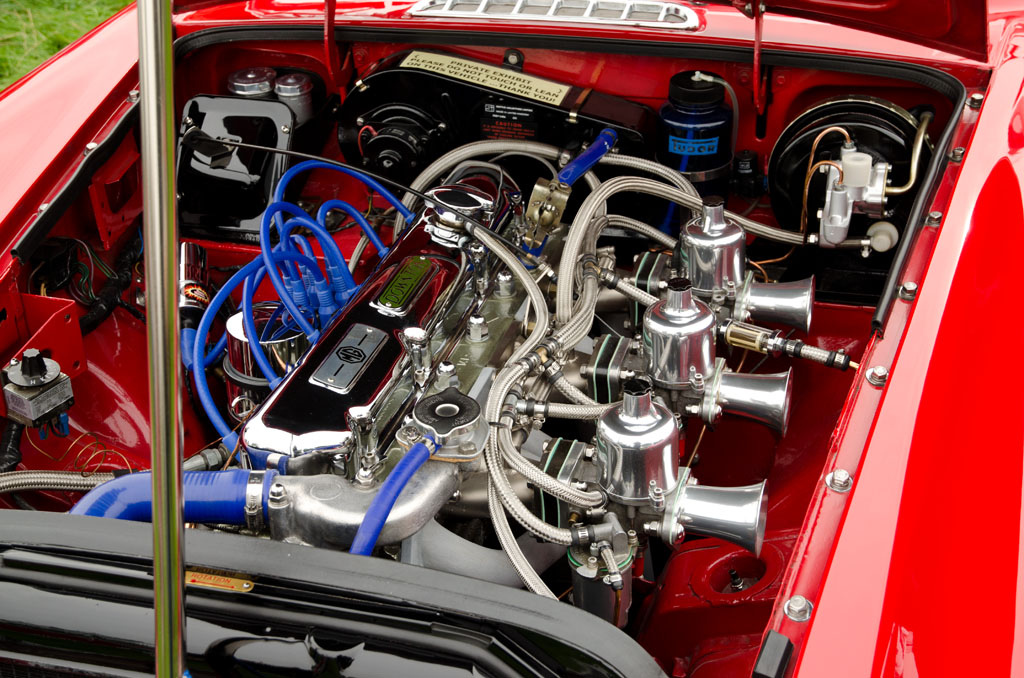
You're sitting in bumper-to-bumper traffic on Biscayne Boulevard near the Aventura Mall entrance, the August sun baking the asphalt to 130 degrees. Your temperature needle sits right in the middle — normal — but a sweet, syrupy smell drifts through the vents. You glance down at the hood and catch a faint wisp of steam curling up near the driver's side fender. That's when you see it: the upper radiator hose, swollen like a balloon about to pop, pulsing with every heartbeat of the engine.
What does a radiator hose bulge actually look like?
Pop the hood when the engine is cold — first thing in the morning before you start it. Run your fingers along both the upper and lower radiator hoses. A healthy hose feels firm but pliable, like a thick garden hose with some give. A bulge feels soft and spongy in one spot, often near the clamp where the hose meets the radiator neck or the thermostat housing. You might see a visible swelling, a section that looks thicker than the rest, or fine cracks radiating outward like spider webs. The rubber may look shiny or glazed from heat cycling. If you squeeze the bulge gently and it doesn't spring back, the inner reinforcement mesh has separated from the rubber.
Why do radiator hoses bulge in the first place?
Think of a radiator hose like a blood vessel. Your engine's water pump pushes coolant through at 15-20 PSI once the thermostat opens around 195 degrees. That pressure stretches the hose slightly every time the engine warms up, then relaxes when it cools down. Over 60,000 to 100,000 miles — or five to seven years in South Florida heat — that constant flexing fatigues the inner reinforcement layer. The rubber itself breaks down from the inside out. Coolant additives that prevent corrosion get used up, and the hose wall starts to rot from within. Salt air off the Intracoastal accelerates the corrosion on the metal fittings, which then eats into the hose ends.
Here's the kitchen analogy: imagine a balloon you inflate and deflate every day. After a few months, one spot gets thin and stretches more than the rest. That's your bulge. The difference? Your cooling system runs at 220 degrees with 15 PSI behind it. When that thin spot lets go, it's not a pop — it's a geyser of 220-degree coolant.
What warning signs show up before the bulge bursts?
The sweet smell is ethylene glycol — coolant — hitting hot metal. You might see a pink, green, or orange crust around the hose clamps where coolant has been weeping and drying. The temperature needle might creep up a hair higher than normal in stop-and-go traffic on I-95, then drop when you're moving. That's the water pump struggling to push coolant past a restricted spot. You might hear a rhythmic ticking or clicking from the engine bay — that's the hose slapping against something as it pulses under pressure. Some drivers notice the heater blows lukewarm even when the engine is hot, because a swollen hose restricts flow to the heater core.
Can I drive with a bulging radiator hose?
Short answer: no. Every minute you drive, the bulge grows. The pressure cycles — 15 PSI hot, zero PSI cold — work like a pump on that weak spot. In Aventura traffic with the AC on, your engine runs hotter, building more pressure. A burst hose on the Palmetto at 5 PM means you're stranded in the center lane with steam everywhere and an engine that's already cooking. Tow bill starts at $150. Head gasket repair starts at $1,800. A new upper and lower hose kit costs $40-80 in parts and takes an hour of labor. The math is brutal.
How do I check my radiator hoses properly?
Wait until the engine is stone cold. Overnight cold. Squeeze each hose along its full length. Feel for soft spots, swelling, or areas that stay compressed. Look at the clamps — original spring clamps lose tension over time; screw clamps can cut into the hose if overtightened. Check the radiator neck and thermostat housing for white or pink crusty deposits. Smell the coolant reservoir — fresh coolant smells sweet; burnt coolant smells acrid. If the reservoir is low but you don't see a puddle, the bulge might be weeping only under pressure. Start the engine, let it warm up to operating temperature, then shut it off and check again. The hoses will be firm at 15 PSI — any bulge will be obvious.
What's the difference between upper and lower hose failure?
The upper hose carries hot coolant from the engine to the radiator. It sees the highest temperatures — 220 degrees or more — and takes the brunt of the pressure spikes when the thermostat opens. It fails first, usually near the thermostat housing. The lower hose carries cooled coolant from the radiator to the water pump. It runs cooler but has a spring inside to prevent collapse under the water pump's suction. That spring can rust and puncture the hose from inside. Both need replacement at the same time. If one went bad from age and heat, the other isn't far behind.
Reading about bulges is one thing — seeing real hose failures is better. This DIY walkthrough from independent creator MaxTheCarGuy covers the five common reasons radiator hoses leak — including loose clamps, cracked or swollen hoses, and corrosion at the hose connection — plus how to fix a leaking hose at home the smart way and when not to risk a DIY repair.
The video is a teaching-style walkthrough from an independent DIY auto channel, not a manufacturer demo: it shows what failing hoses actually look like — swollen, cracked, and corroded — walks through the home fix, and ends with the honest part, when a hose problem is beyond driveway repair. Watch it once and the squeeze test in the previous section will make a lot more sense the next time you're under your hood.
When to call us
If you spot a bulge, smell coolant, or see the temperature needle climbing — don't roll the dice. Aventura Mobile Auto Care comes to you in Aventura and nearby, Monday through Saturday, 8 AM to 8 PM. We'll pressure-test the system, replace both hoses with the right clamps, flush the old coolant, and refill with the correct spec for your engine. Call (786) 892-8110 and we'll get you sorted before that bulge becomes a breakdown.