You're rolling down Biscayne Boulevard at 4 PM, sun dropping straight into your windshield, and the car in front of you kicks up a sheet of road spray from the afternoon storm. You hit the washer stalk. Nothing. A dry smear. Or worse — a sad dribble from one side while the other nozzle stays dead. That is a two-minute fix you can do in a Publix parking lot, and it starts with popping the hood.
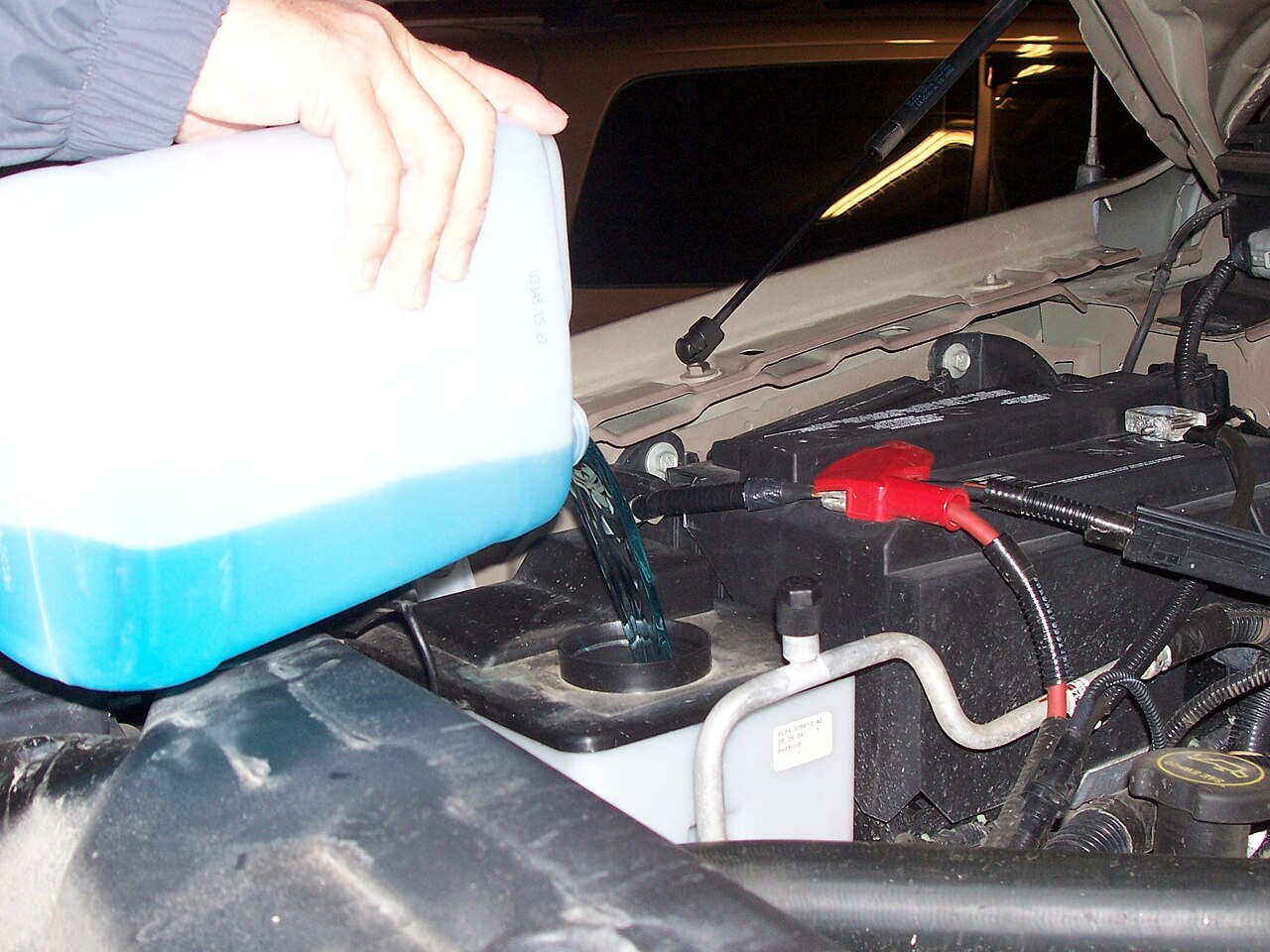
Refilling windshield washer fluid takes two minutes: pop the hood, find the reservoir with the blue windshield-wiper cap, and pour in fluid until it reaches the full line. Then test the nozzles. If a nozzle sprays weak or not at all, it's usually clogged with wax or hard-water scale — clear it with a pin and a blast of compressed air. In South Florida's daily downpours and love-bug seasons, check the reservoir monthly and keep a spare jug in the garage.
Where is the washer fluid reservoir, and what am I looking for?
Open the hood and look for a translucent plastic jug with a cap marked by a little windshield-and-spray symbol — almost always blue, sometimes black. It's usually near the front corner of the engine bay, driver or passenger side depending on the car. The jug holds roughly a gallon (about 4 quarts) on most sedans and crossovers. If you can't spot it, check the owner's manual diagram — ten seconds of looking beats guessing and pouring fluid into the coolant overflow, which is the classic mix-up. Coolant reservoirs have warning labels and screw caps; the washer jug has a flip or quarter-turn cap with the wiper symbol.
How do I refill it without making a mess?
Buy the blue stuff — standard washer fluid, about four to six dollars a gallon at any auto parts store or big-box retailer. In South Florida, grab the "bug remover" formula if you drive I-95 or the Turnpike regularly; love-bug season turns windshields into a Jackson Pollock twice a year, and the additive version cuts through the protein instead of smearing it. Do not use plain water. Water grows algae in the reservoir in our heat, clogs the pump filter, and gives you zero cleaning power against road film.
Flip the cap open, set a funnel in the neck if you have one (a paper funnel works; a steady hand works too), and pour slowly. Fill to the molded "FULL" line or the bottom of the filler neck — not to the brim, because fluid expands in a hot engine bay and will push out the vent. Snap the cap shut. Done. Start the car, hold the washer stalk for three seconds, and watch both nozzles throw a fan of fluid across the glass. The whole job, including the test spray, is under five minutes.
What if the reservoir is full but a nozzle barely sprays?
Then the problem is downstream: the nozzle, the hose, or the pump. Diagnose in order, cheapest first.
1. The nozzle is clogged. This is the cause nine times out of ten. Car wax, hard-water scale, and dried fluid cake inside the tiny nozzle opening until the spray turns into a dribble. With the system off, take a sewing pin or a needle and gently work it in and out of the nozzle hole — don't force it or enlarge the opening. Then blast the nozzle with a can of compressed air (the keyboard-cleaner kind) for two seconds. Test the spray. On most cars this fixes it immediately.
2. The hose popped off or cracked. Follow the thin black rubber hose from the nozzle back along the underside of the hood to the pump on the reservoir. In Florida heat, these hoses get brittle and can split, or pop off their barb fitting. A split hose leaks fluid onto the engine bay — you'll see the wet spot. Push a popped hose back on firmly; replace a cracked one (bulk washer hose is a few dollars a foot, and it just pushes onto the fittings).
3. The pump is dead. If you hold the stalk and hear nothing — no hum from the front of the car — the pump motor has likely failed. If you hear the hum but get no fluid and the reservoir is full, the pump's inlet filter is clogged with algae or sediment. Pumps are inexpensive, but replacement means removing the reservoir, which on some cars requires pulling a fender liner. That's the line where most people call a mobile tech.
Can I watch the nozzle fix before I try it?
Yes — this is a see-it-once job. In this video, RJ The Bike Guy fixes a clogged washer nozzle on his Honda Civic: he pulls the nozzle, soaks out the crud with vinegar, clears it with compressed air, and shows you what a healthy spray pattern looks like versus a clogged one. Watch his hands during the pin-and-air part — gentle in-and-out motion, no gouging. That's the exact move for your nozzles.
Video summary: A DIYer unclogs a windshield washer nozzle on a Honda Civic — removing the nozzle, soaking it in vinegar, clearing it with compressed air, and comparing the spray pattern before and after. The pin-and-air technique he demonstrates is exactly how to clear your own nozzles.
How often should I check the fluid in South Florida?
Monthly. Our afternoon storms mean you use the washers more than drivers in dry states, and the reservoir evaporates faster sitting in a 95-degree engine bay. Make it part of your fuel-stop routine every fourth or fifth fill-up: pop the hood, glance at the jug. Keep one spare gallon in the garage — not the trunk, where heat degrades it and a leak soaks your carpet. And every time you refill, run the washers for a full three-second burst and watch both nozzles. Catching a weak nozzle early is a pin-and-air fix; ignoring it until the nozzle seals completely can mean replacing the nozzle itself.
When should I call Aventura Mobile Auto Care instead?
Washer fluid and nozzles are DIY territory. Call us at (786) 892-8110 when it's the parts you can't reach in a parking lot:
- You hear the pump hum but get no fluid after clearing the nozzles and checking the hoses — the pump or its filter needs hands-on work.
- The hose is cracked deep inside the cowl where you can't reach it without removing trim.
- Fluid is leaking onto the ground under the front of the car — the reservoir itself may be cracked.
- The washer stalk or wiring is suspect — no hum at all, fuses check out, and you'd rather not chase wiring.
We serve Aventura and nearby, Monday through Saturday, 8AM to 8PM, and we come to you — driveway, office garage, wherever the car sits. No pressure, no upsells: if it's a pin-and-air job, we'll tell you to save your money.