It was a warm Saturday morning in Aventura, and I was pulling up near the corner of 183rd Street and Biscayne Boulevard to drop off a client’s sedan for a quick oil change. As I walked around the car, a familiar scent of tires and brake dust hit me, but the real catch was the faint squeak that skittered from the front brakes each time we tapped the brake pedal. The driver looked worried about safety and wanted to make sure those brakes were still good before hitting the highway.
Instead of sending the car to a shop to have the wheels removed, I decided to show the owner how to check the brake pad thickness right through the wheel spokes. It’s a quick trick that doesn’t require a lift or a wrench set—just a feeler gauge, a flashlight, and a little patience.
What tools do I need to check brake pads without removing wheels?
For a basic check you only need a flashlight and your eyes — most car owners can do this in a parking lot. A clean cloth helps wipe brake dust off so you can see the pad edge clearly. If you're checking in a bright garage with good light through the wheel spokes, the flashlight isn't strictly necessary, but it helps when you're looking at the rotor's surface.
How do I locate the brake pad area on my car?
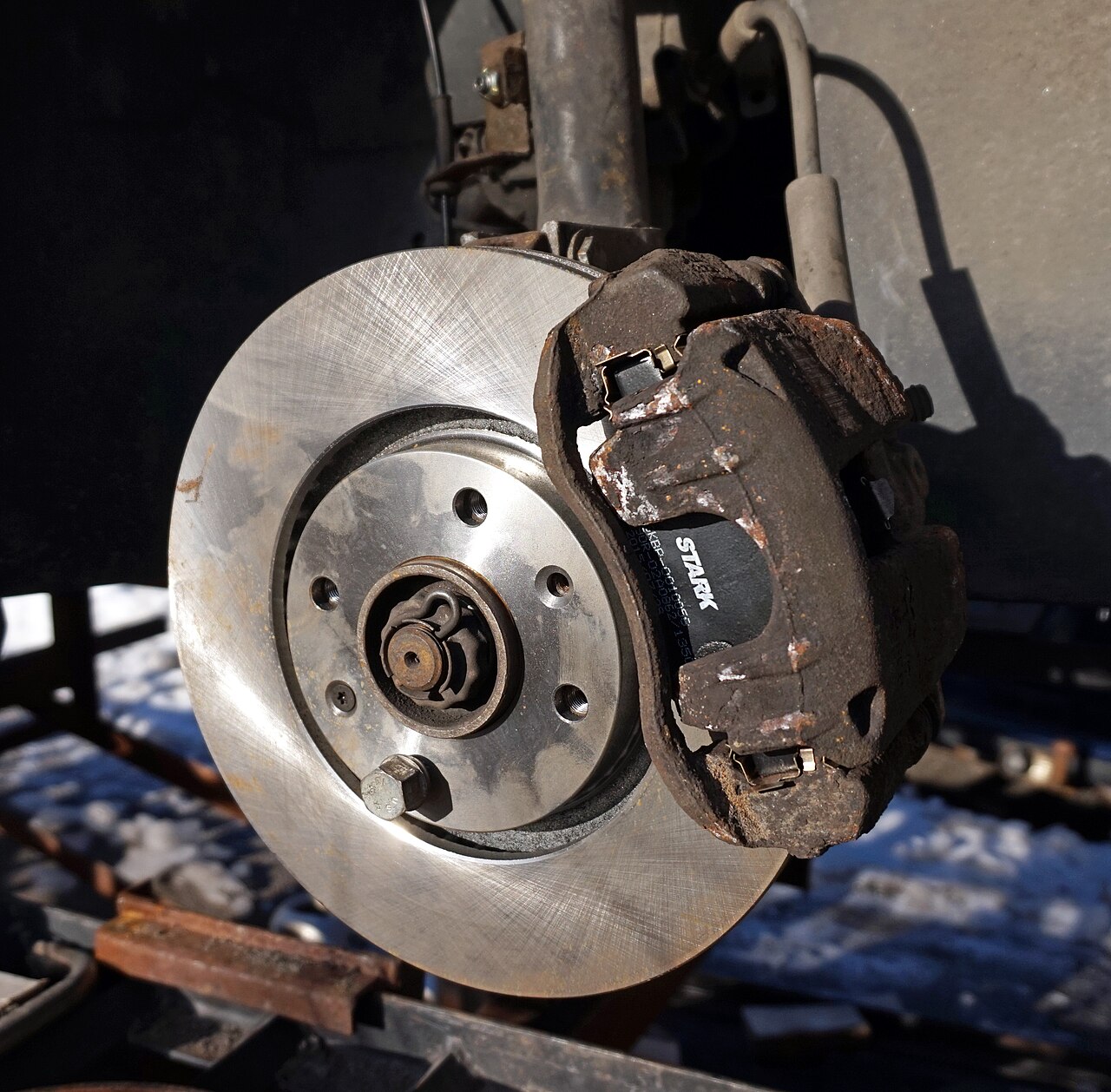
Look through the wheel spokes at the brake caliper that sits over the rotor. The pad is the flat friction block that presses against the rotor’s surface, with a thin metal backing plate behind it. You’ll see a small gap on either side of the pad where it meets the rotor. That gap is what you’ll measure. Shine the flashlight through the spokes and look above and below the caliper; you don’t need to lift the car or remove anything.
How do I measure pad thickness through the wheel spokes?
Look through the wheel spokes at the brake caliper — the clamp-like bracket sitting over the shiny rotor disc. Inside it you'll see the brake pad: a flat block made of friction material bonded to a thin metal backing plate. You're comparing the two layers. The friction material is the part that wears down; the backing plate doesn't. If the friction material looks thinner than the backing plate behind it — roughly 2 to 3 mm — the pads are due. Many pads also have a small metal wear tab that starts squeaking against the rotor when the material gets thin; that squeak is the pad telling you its time is up.
For a closer look, shine a flashlight through the spokes and sight along the edge of the pad. Check both the inner and outer pads if you can see them — they don't always wear evenly. If the material measures under 2 mm, or you see metal-on-metal contact, don't drive on it — get the pads replaced.
Can I rely on the brake pad feel alone, or should I also check the rotor?
Feel alone isn’t enough. While the pad thickness gives you a clear number, the rotor’s surface can show wear or scoring that a pad alone can’t reveal. Look for uneven spots, pits, or a shiny, glazed look. If the rotor looks worn, it may need resurfacing or replacement before new pads will perform properly.
What should I do if the pads look okay but I still hear a squeak?
Squeaking can be caused by brake dust or a worn brake pad shim. Clean the area with brake cleaner and a rag, then take a short test drive with a few gentle stops to see if the noise disappears. If the squeak persists, it might be a thin pad that’s still within the 2‑3 mm range, and replacement is a good idea for safety.
How often should I re-check my pads after this inspection?
Make it a habit every time you rotate your tires or wash the car — a quick peek through the spokes takes less than a minute per wheel. In South Florida's stop‑and‑go traffic and summer heat, pads wear faster than the mileage in the owner's manual suggests. Catching a pad at 3 mm early gives you time to plan the replacement instead of hearing metal‑on‑metal on I‑95.
When to call us
At Aventura Mobile Auto Care, we're ready to give a thorough brake inspection or replace pads right at your doorstep. Call us at (786) 892-8110 and we'll come to Aventura and the surrounding area. Whether you're stuck with a squeaky brake or just want to double‑check your pad thickness, we'll help keep you safe on the road. Our mobile service runs Monday through Saturday from 8 AM to 8 PM.
The video from Girlie Garage, “How to Check The Thickness (Life Left) In Your Brake Pads WITHOUT Removing the Wheel,” shows the quick visual check through the wheel spokes — sighting the pad's friction material against its backing plate, exactly the method described above.