It's a brutal South Florida morning, you're already sweating just thinking about the traffic on I-95, the Palmetto, or the Turnpike — and then the temperature gauge starts climbing. Topping off the coolant is one of the simplest things you can do under the hood, but the mix ratio matters: get it wrong and you're not protecting the engine. Here's how to do it safely.
What's the Right Coolant Mix Ratio?
The right mix ratio is crucial to avoid damaging your engine. Most car manufacturers recommend a 50/50 mix of coolant and water — half antifreeze, half distilled water. Some vehicles call for a different ratio or a specific coolant chemistry (your owner's manual names the exact spec, and the coolant bottle lists which specs it meets). Never guess: the wrong chemistry or a too-weak mix leaves the engine unprotected against both overheating and corrosion.Why Is the Coolant Mix Ratio Important?
The coolant mix ratio affects the performance and longevity of your engine. If the ratio is off, it can lead to overheating, which can cause costly damage to your engine. A 50/50 mix ensures the coolant can effectively absorb and dissipate heat, keeping your engine running smoothly. This is especially important in South Florida, where the high temperatures and humidity can cause engines to overheat quickly.How to Check the Coolant Level?
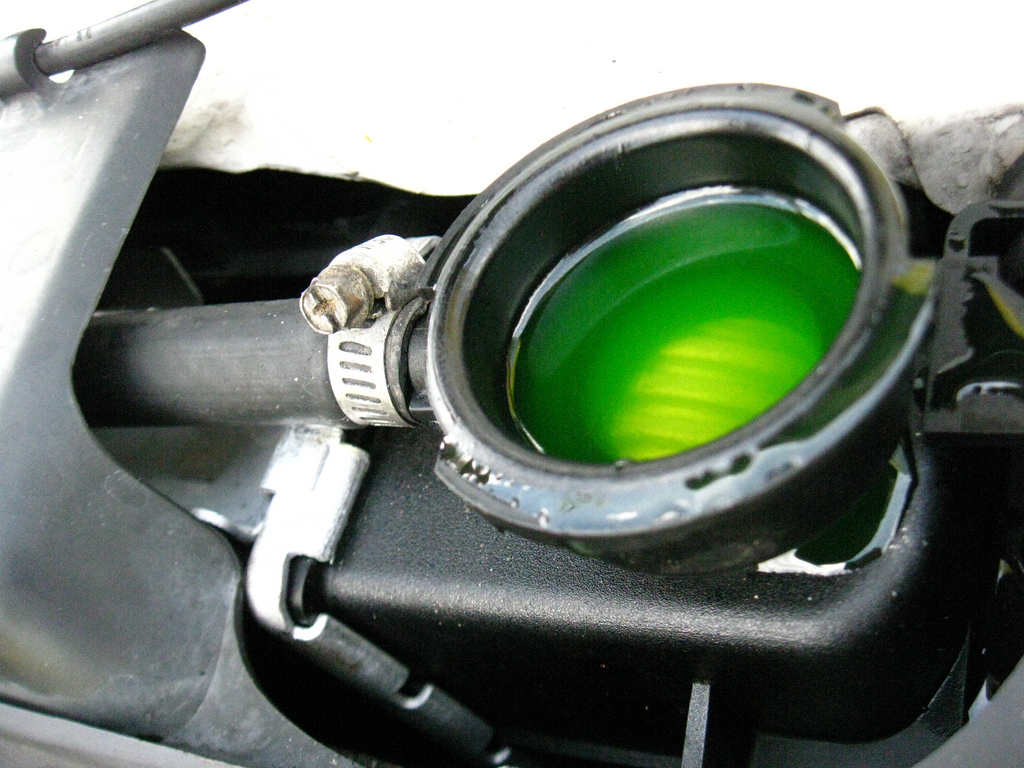
Safety first: never open a cooling system on a hot engine. Wait until the engine is completely cool — at least 30 minutes after driving, longer on a hot day. A hot system is pressurized, and opening it can spray scalding coolant. To check the coolant level, locate the coolant reservoir under the hood — a translucent plastic tank with minimum and maximum marks on the side, connected to the radiator by a hose. Check the level against those marks. If it's below the minimum, you need to add coolant. Also look at the color: healthy coolant is bright and clear (green, yellow, orange, or pink depending on the type). Dark, rusty, or oily-looking coolant means it's contaminated — don't just top it off; the system needs a flush.What to Do If You Add Too Much Coolant?
If you add too much coolant, it can lead to an over-concentration of antifreeze, which can damage your engine. If you notice the coolant level is above the maximum mark, you'll need to drain some of the excess coolant and mix it with water to achieve the correct ratio. It's also a good idea to check the owner's manual for specific instructions on how to drain and refill the coolant.Local Scenario: Top Off Coolant in a Parking Garage
Imagine you're driving in a parking garage in downtown Miami, and your car's temperature gauge starts to rise. You pull over and check the coolant level, only to find that it's below the minimum mark. You quickly add the correct amount of coolant and mix it with water to achieve the 50/50 ratio. As you wait for the coolant to circulate, you notice that the temperature gauge starts to drop, and your car's engine begins to run smoothly again.The video above is "How to Check and Fill TOYOTA Engine Coolant or Antifreeze" — a walkthrough of checking the coolant level in the overflow reservoir and topping it off. The process shown is the same on most vehicles: find the reservoir, read the level against the min/max marks, and add the correct coolant to bring it up. Pay attention to the part about checking the level with the engine cold — that's the safety rule that matters most.