You walk back to the car in the NE 199th Street garage — three levels up, six rows deep, somewhere between Macy's and the Nordstrom wing. There's a nail. It punched cleanly into the tread and you can see daylight around it. The technician who meets you at your level is probably going to plug it, patch it from the inside, and have you back at 80 PSI in twenty minutes.
Now imagine the same nail, same day, but a half-inch higher — sitting in the curved black side of the tire, between the edge of the tread and the rim. The answer is completely different. The sidewall cannot be repaired. Anyone who tells you otherwise is gambling with your family's life at highway speed.
What the sidewall actually does
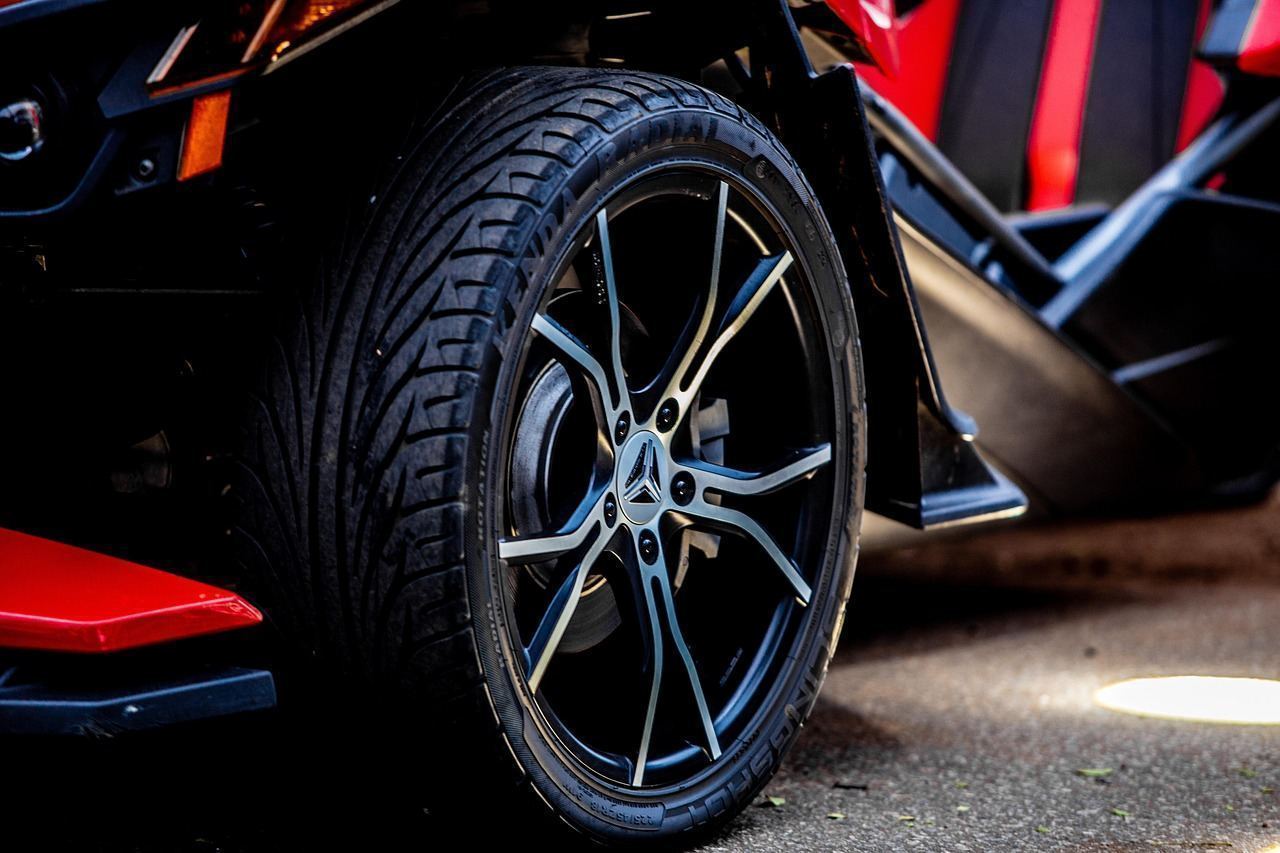
A tire isn't a balloon. It's a layered, engineered shell. From the inside out you have the inner liner, the body ply (usually polyester), the steel belts, the tread, and the sidewall — which itself is a sandwich of body ply, sidewall rubber, and the bead that seals against the rim. The sidewall is the part that flexes every single rotation, holds the curb-scuff load, and transmits steering input. It also has to contain the air pressure pushing outward against the vehicle's weight pushing inward.
The sidewall flexes millions of times across a tire's life. That's by design. What it cannot do is flex around a hole, because the body ply — the actual structural fabric — has been cut. A puncture in the tread sits between the steel belts; those belts bridge over a small wound and a plug-and-patch repair can restore airtightness and most of the strength. A puncture in the sidewall cuts straight through the body ply. There is no steel belt, no bridging material, nothing to carry the load around the hole.
What the industry actually says
The Rubber Manufacturers Association (RMA) and the equivalent guidelines used across North America and Europe are explicit: a tire is repairable only when the injury is in the tread area, is no larger than 6 mm (¼ inch), and is not within the shoulder or sidewall. The RMA repairability chart, in use since the 1990s, was updated most recently in 2019 and the sidewall rule has not changed. The Tire Industry Association's certified training program teaches the same boundary. The U.S. Tire Manufacturers Association publishes the same guidance in their consumer tire care literature.
If a shop offers to glue a patch over a sidewall cut, or to fill it with a sticky plug, that work is outside every published standard in the industry. The shop is choosing to take on a risk that the manufacturer, the standards body, and your insurer have all agreed is unacceptable. If the tire fails at speed, the failure will trace back to that repair.
"Tire punctures limited to the tread area may be repaired. Injuries to the sidewall or shoulder area are not repairable." — U.S. Tire Manufacturers Association, Puncture Repair Guidelines
What "end of the tire" actually means in Aventura
If you're reading this from the third level of the Aventura Mall garage, the NE 199th deck, or the lot behind Biscayne 199, the practical question is: what happens in the next hour?
There are a few honest answers, and the right one depends on your spare situation, your tire's age, and whether the rest of the vehicle is in a position to keep driving.
| Situation | Honest answer | Mobile option |
|---|---|---|
| Sidewall cut, full-size spare present, in good condition | Spare swap on-site at your level | Spare-swap service — see pricing |
| Sidewall cut, no spare, run-flat tires equipped | Limited drive to a tire shop (usually 50 mi / 80 km at ≤50 mph) | We can verify run-flat status on-site |
| Sidewall cut, no spare, not run-flat | Tow required — do not drive on it | diagnostic on-site + tow coordination |
| Sidewall cut, tire already 6+ years old | Replace regardless — old tire & sidewall damage don't combine | Mobile spare + sourcing a replacement for the damaged tire |
Why we never plug a sidewall, even when a customer asks
We get the request. The driver has just watched a tire go flat in a hot garage, they have a meeting in twenty minutes, and a plug is cheaper than a tow. We understand the math they're running.
Our answer is the same every time. A sidewall patch isn't "a worse plug." It's a fundamentally different repair done to a fundamentally different part of the tire. Tread repairs work because the steel belts bridge the wound and the patch seals it. A sidewall patch has no steel to bridge and the surrounding rubber is in constant flex — the patch edge lifts, the body ply continues to tear, and the failure is sudden. At 70 mph on the William Lehman Causeway, sudden is the word that matters.
If you have a full-size spare in the trunk and the sidewall is the problem, the right call is the spare swap, not a sidewall repair. If you don't have a spare, the right call is triage on-site — we change whatever wheel we legally can, leave you with a vehicle that is safe to move, and coordinate the next step with you. We don't plug sidewalls. We've seen what a plugged sidewall looks like after the blowout.
The five-minute check you can do yourself
If you're not sure whether your puncture is in the sidewall or the tread, there's a simple rule. The shoulder is the curved transition between the sidewall and the tread, about an inch wide. The sidewall is the flat black area between the shoulder and the rim. The tread is the patterned surface that touches the road.
- Find the puncture. If you can see daylight through the tire from the inside, it's already too damaged for a repair in any zone.
- Locate the tire's shoulder — the rounded band where the patterned tread meets the smooth sidewall.
- If the puncture is in the patterned area and well inside the shoulder, it's a candidate for a plug-and-patch repair.
- If the puncture is in the smooth black area, it's a sidewall injury. Don't drive on it. Call us.
- If the puncture is right at the shoulder line, treat it as a sidewall injury. Same answer.
What a mobile spare swap actually looks like
When you call +1 (786) 892-8110 and book a spare swap from a sidewall-flat scenario, here is the actual sequence. You tell us your level, your row, and which tire is damaged. We confirm the vehicle make and tire size on the phone so we arrive with the right equipment. We meet you at your level, set up a safe work zone behind the vehicle, loosen the lugs on the damaged wheel, jack the corner, swap the wheel, torque the lugs to spec, and check the spare's pressure. We log the work on a paper ticket and you're done.
If your spare is a temporary "donut," we'll tell you up front — the donut is rated to about 50 mph and 50 miles. We can help you plan the next move from there.
Sidewall damage, no spare, and the vehicle's stuck?
Our diagnostic covers on-site assessment, safe relocation of the vehicle within the lot, and tow coordination with a North Miami-Dade shop. The triage fee is credited toward the final work. See pricing for current rates.
Related scenarios we handle in this exact situation
Sidewall puncture
The full walkthrough of the unsafe-to-repair scenario, including how to recognize a tire that's already unsafe to drive on.
Sidewall scenario →No spare on board
The triage flow when your vehicle has no spare, no run-flat, and the damaged tire cannot be repaired. Includes the $40 hold policy.
No-spare scenario →Parking-lot flat
The level-by-level playbook for the Aventura Mall garages, including how to safely position the vehicle for a mobile swap.
Parking-lot scenario →Highway blowout
What to do if the sidewall fails at speed on I-95, the causeway, or Biscayne — and how we meet you once you're safely off the road.
Blowout scenario →The honest bottom line
If a service is offered that "repairs" a sidewall, decline. If you're reading this at the moment of a sidewall flat, the right move is to stop driving on the tire, call us, and let us triage the actual situation you have. We do this all day, in the garages, on the causeways, in the lots off Biscayne, and the answer is rarely as bad as it looks in the moment — but it is always the right answer, not the cheap one.
For pricing on a spare swap, a diagnostic, or a coordinated tow, see our pricing page. To book a slot, jump to the booking page or call us at the top of this page.
Sources & standards referenced
- U.S. Tire Manufacturers Association — Puncture Repair Guidelines (current edition)
- Rubber Manufacturers Association — Tire Repairability Chart, last revised 2019
- Tire Industry Association — Certified Tire Service Technician training materials
- ISO 4209-1 — Pneumatic tyres (general) — repair limitations referenced in current industry practice